
Landscape Lighting
Uplit trees, lit paths, and a patio you can use after dark. The work that makes a property look finished at night.
Light the things worth looking at
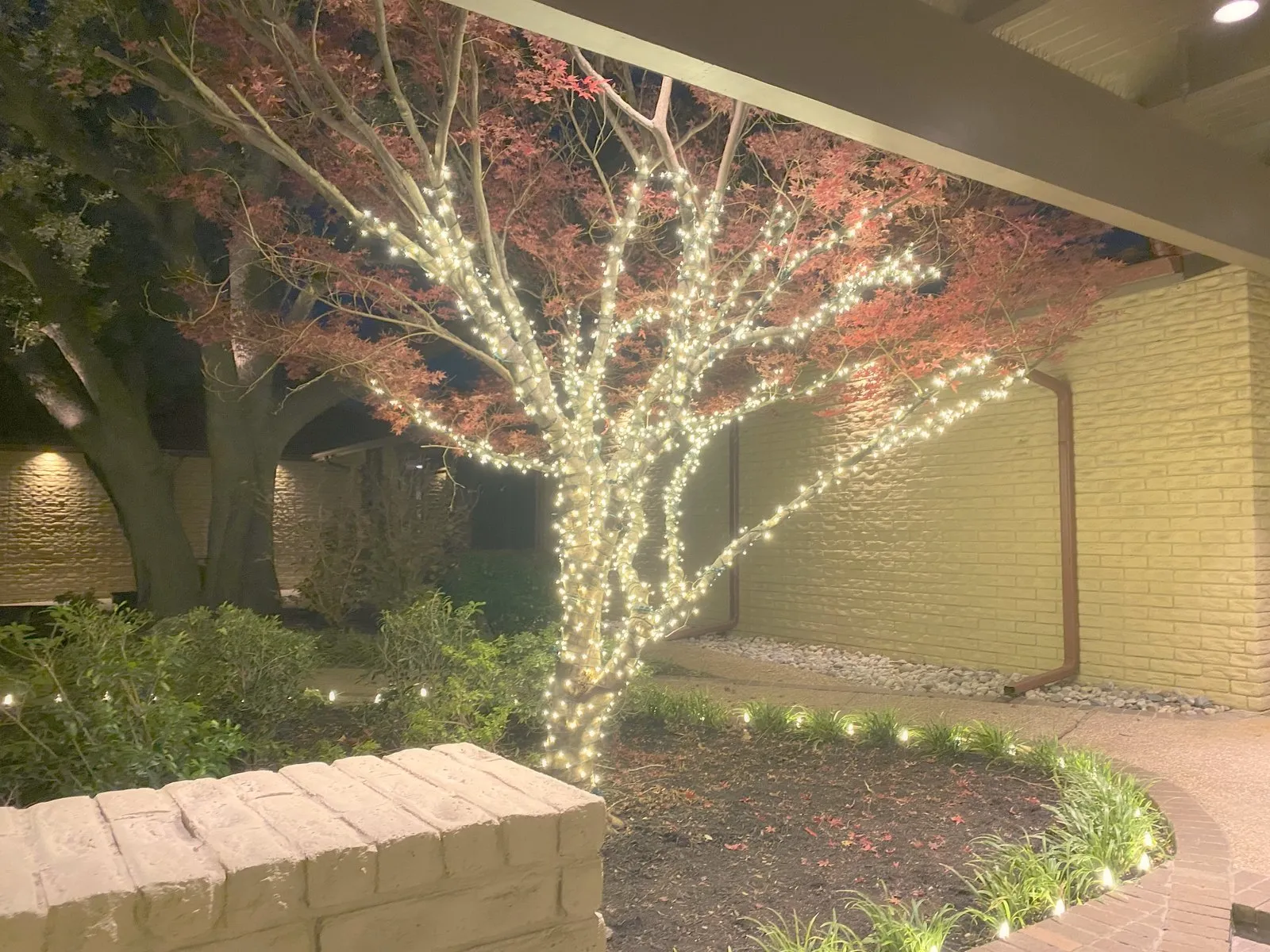
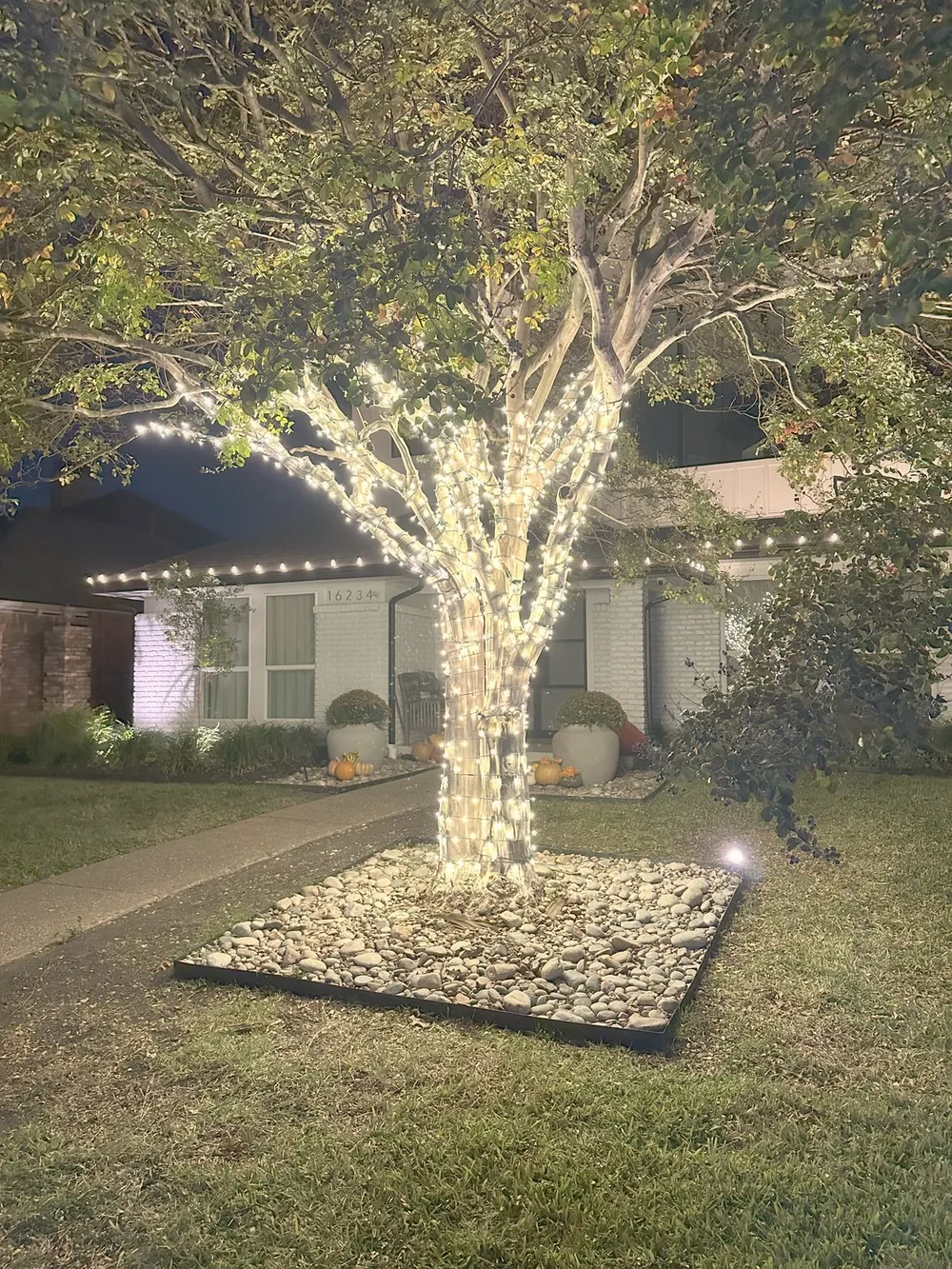
Good landscape lighting is mostly restraint. A well-lit property is not evenly lit. It picks the specimen oak, the stone facade, the entry, and the path, and lets the rest fall away. Light everything and you get a parking lot.
We design around what your property already has going for it. A mature tree gets uplit from below so the canopy reads. A stone wall gets grazed from close in so the texture shows. A walkway gets enough light to be safe and not one lumen more.
Year-round, not seasonal
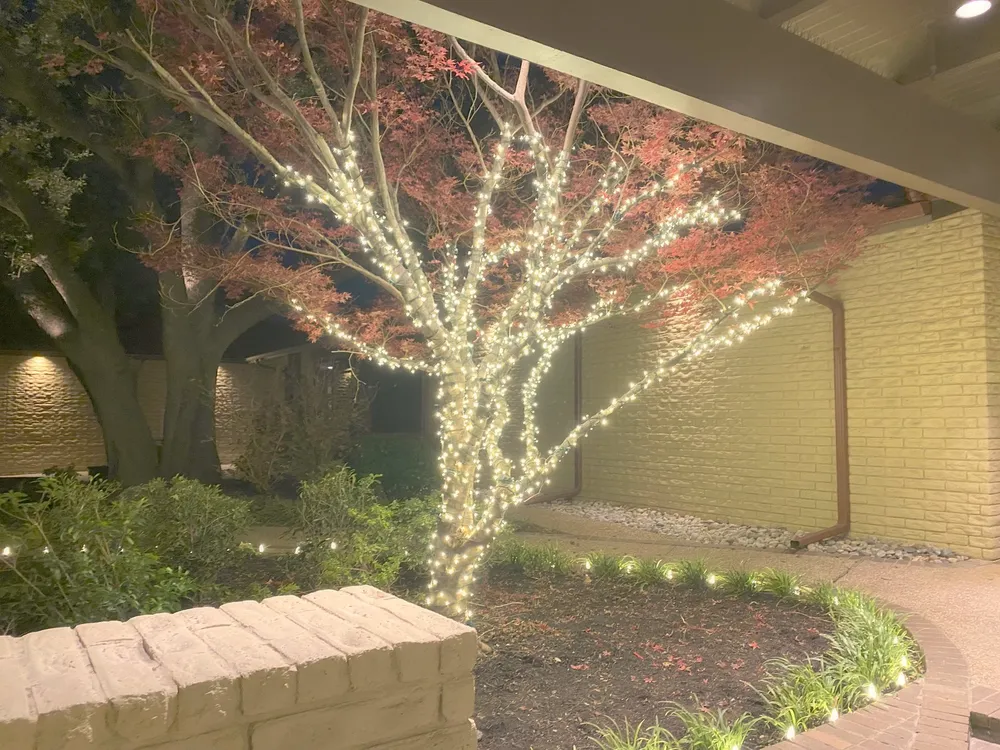
Landscape lighting is not a holiday product, and it does not come down in January. It is fixtures and wiring that stay put and work every night of the year.
It is also the natural next conversation for customers who already have us on the property in December. If we are wrapping your trees for Christmas anyway, we already know what your yard looks like after dark.
Why most landscape lighting looks wrong
Drive any established neighbourhood after dark and the pattern repeats. Fixtures spaced evenly along a path like runway markers. A floodlight aimed at the front of the house from the middle of the lawn, flattening everything it hits. Bulbs that are noticeably bluer than the porch light beside them.
All three come from the same mistake: treating the fixtures as the product instead of the light. Even spacing is a symptom of nobody deciding what was worth lighting. A flat wash is what happens when a fixture is too far from what it is lighting. Mismatched colour temperature is what happens when fixtures get bought at different times without anyone writing down what was used.
The fixes are unglamorous. Pick the features worth showing and skip the rest. Graze walls from close in so the texture reads. Keep every bulb on the property the same temperature. Aim so the source is hidden and only the effect is visible. None of that costs more than doing it badly.
Fixtures, voltage and what actually lasts
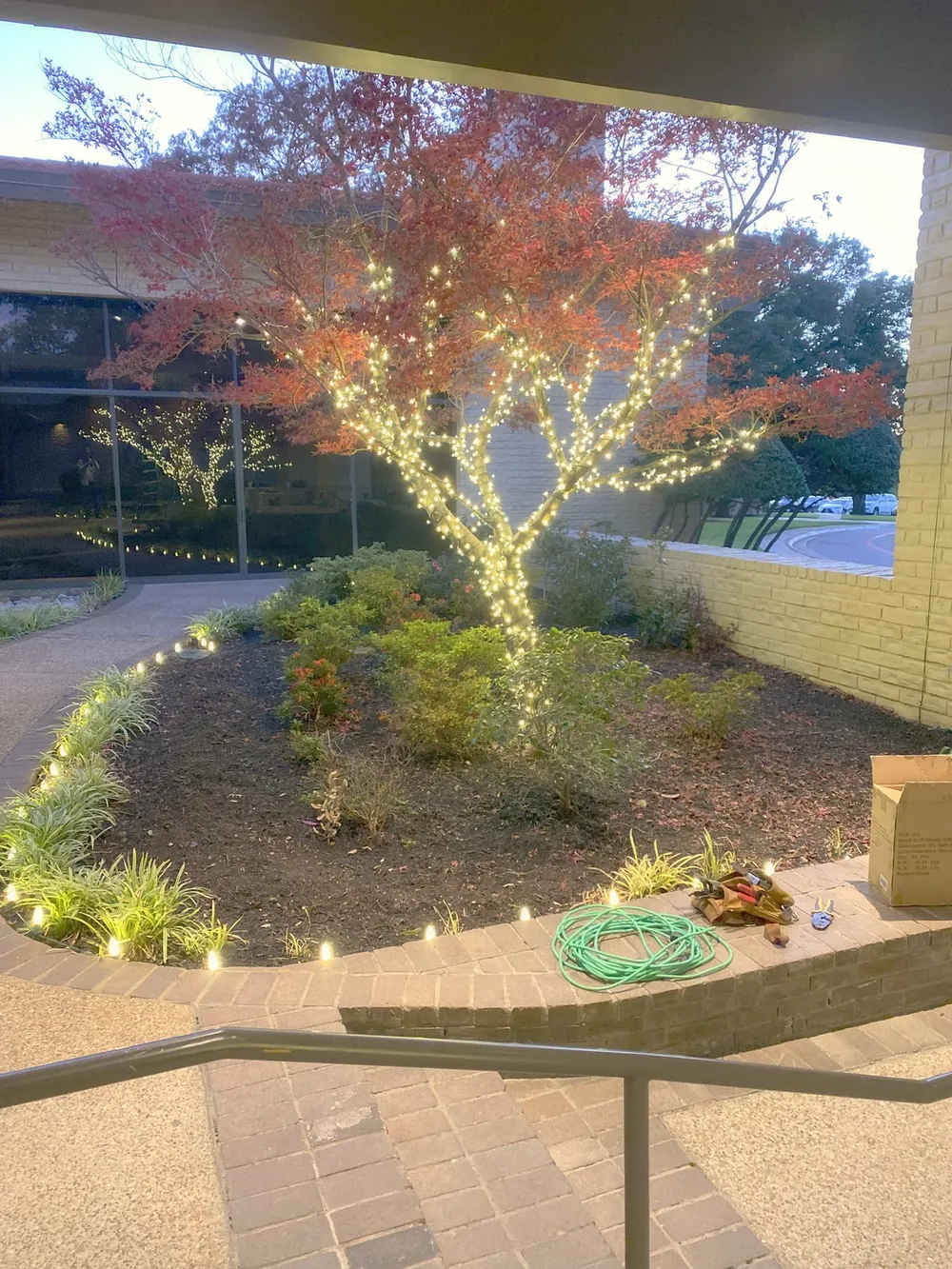
Low-voltage is the right answer for almost every residential property. It is safer to work around, easier to extend later, and the fixtures are not competing with the house circuit.
Fixture quality is where landscape lighting quietly succeeds or fails. Cheap housings corrode at the seal, water gets in, and the fixture fails in its second or third year, usually all of them within a few months of each other.
The cable and the connections matter as much as the fixtures. A buried connection that was not properly sealed is the most common failure we are called out to fix on somebody else's install.
Designing for the dark, not for the catalogue
The mistake that defines bad landscape lighting is even spacing. Fixtures placed at regular intervals down a path look like runway markers and tell you nothing about the property.
Good design picks its subjects. The specimen tree, the stone face, the entry, the change in level that is a trip hazard. Everything else stays dark on purpose, because contrast is what makes the lit things read.
Aim matters too. A fixture close to a wall grazes it and shows the texture; the same fixture three feet further out flattens it. That distinction costs nothing and is the difference between a property that looks designed and one that looks lit.
Maintenance, and what fails first
Landscape lighting is not fit-and-forget, but the maintenance is light. Lenses get dirty, mulch gets pushed over fixtures, and plants grow into the beam over a season or two.
The first thing to fail is usually a connection rather than a fixture, and it is almost always one that was not properly sealed when it was buried. That is an install-quality problem rather than a product problem.
The second is aim. A fixture that was perfect the day it went in is pointing at a bush that has grown six inches. Re-aiming is a short visit and makes a bigger difference than replacing anything.
What is included, every job
Commercial-grade lights, supplied and maintained by us
Design walkthrough before anything goes up
Insured professional install
Free fixes all season long
Get your number
Tell us where to look and Bill comes back to you the same day with a real number. You are not committing to anything.
Would rather talk? Call (972) 658-0780 and you get Bill, or use the contact page.
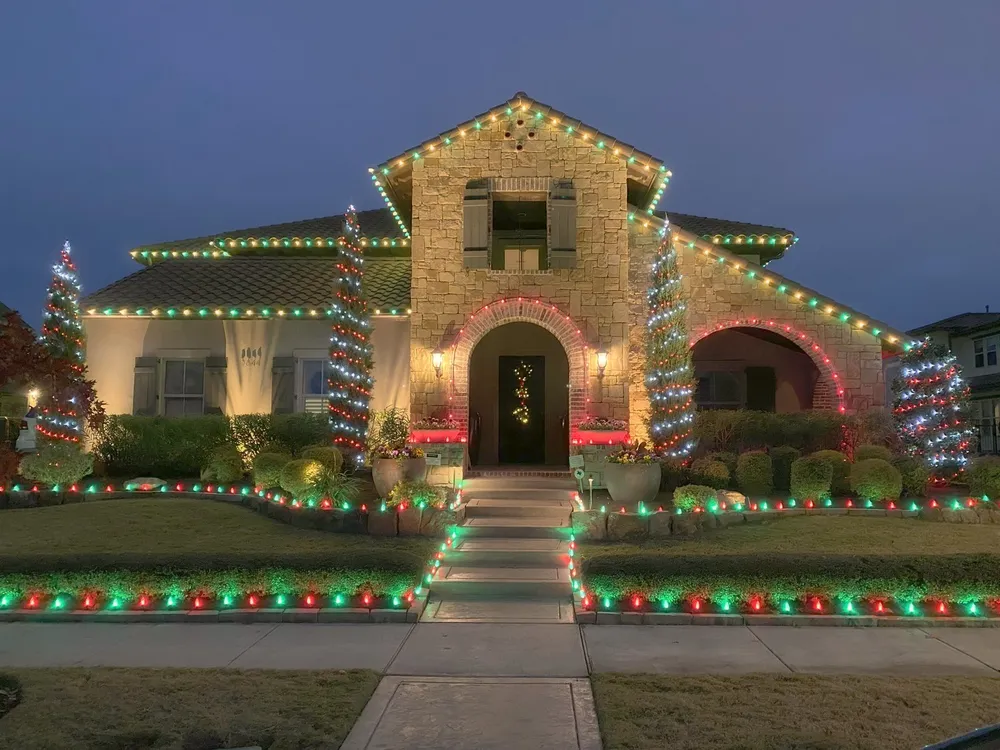
One call. The whole season handled.
Get your quote, pick your install date, and spend December looking at it instead of working on it.
Landscape Lighting questions
Is this the same as Christmas lighting?
No. Landscape lighting is permanent fixtures and wiring installed to stay year-round. Christmas lighting is a seasonal display that we install, maintain, take down, and store.
Can you add patio string lighting?
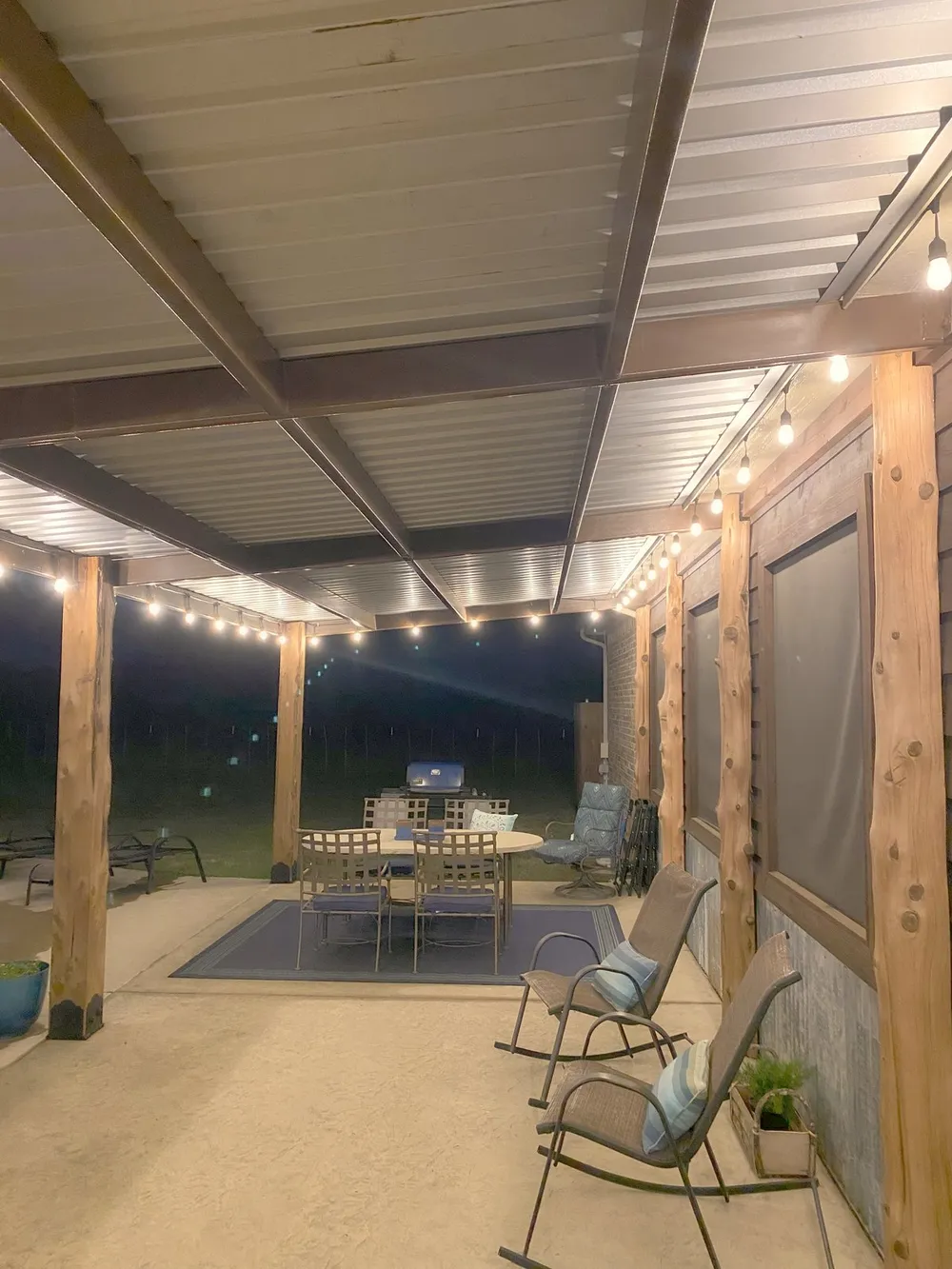
Yes. Bistro-style string lighting over a patio or pool area is some of the most-used lighting we install, residential and commercial alike.
Does this run all year?
Yes. Landscape lighting is permanent fixtures and wiring, on a timer, working every night rather than for six weeks.
How much maintenance does it need?
Very little. Lenses need cleaning occasionally, and fixtures need re-aiming as plants grow. Both are short visits.
Can you add to a system somebody else installed?
Sometimes. It depends on the transformer capacity and the state of the existing cable, which is the first thing we would look at.